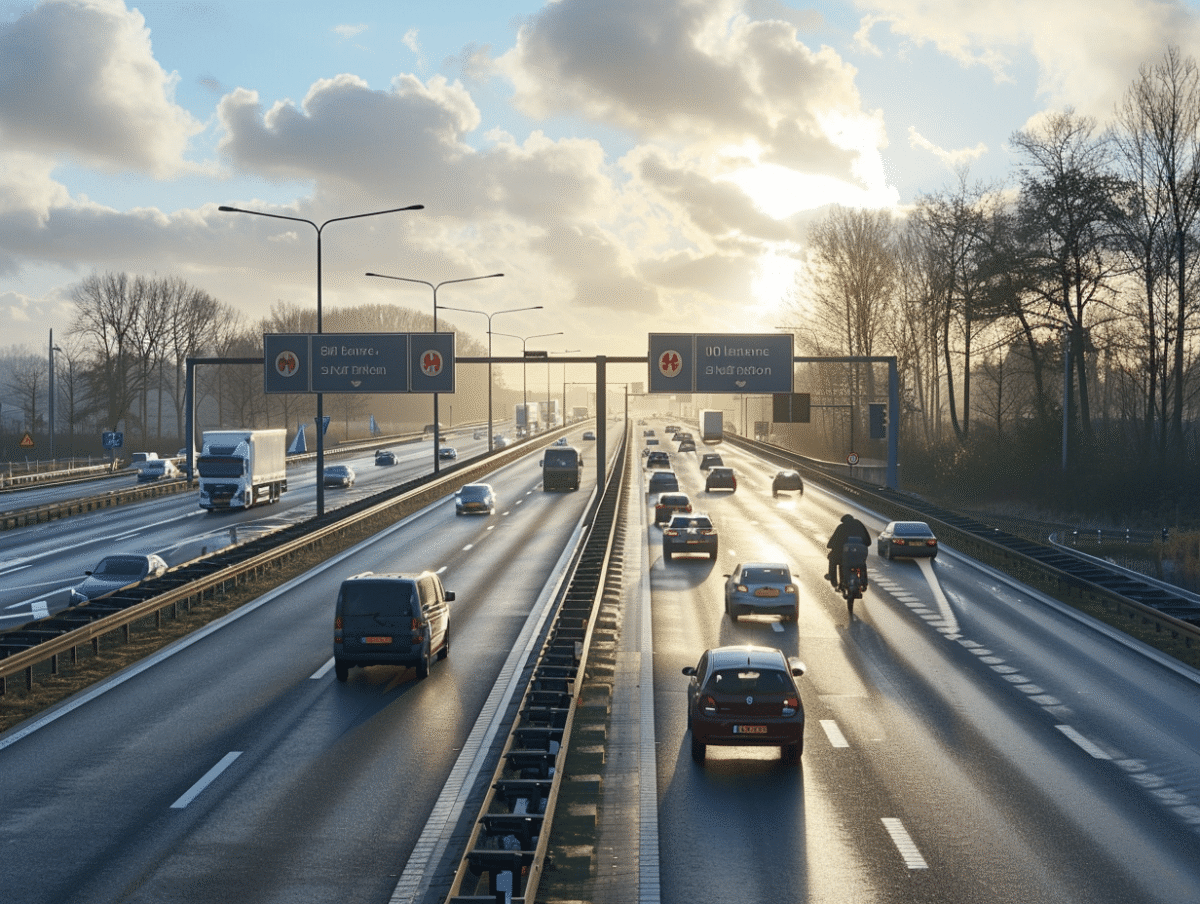
By 2025, a persistent rumor is circulating: the speed limit on highways could be lowered to 100 km/h. This possibility fuels debates among both motorists and road safety experts. The idea seems radical, but it is not without foundation.
In light of growing environmental challenges and safety concerns, some governments are considering drastic measures to reduce CO2 emissions and decrease road accidents. However, skeptics point out that this limitation could lead to counterproductive effects, such as traffic congestion and driver frustration.
The reasons and motivations behind the proposal to limit speed to 100 km/h
The decision to reduce the speed on highways to 100 km/h starting in 2025 comes directly from the European Parliament. This initiative aims to address environmental and safety challenges. The European Union, composed of member countries such as France, Germany, Italy, and the Czech Republic, seeks to reduce CO2 emissions and decrease the number of fatal accidents.
The General Commission for Sustainable Development conducted a study showing that this reduction could yield savings of 360 million euros through fuel savings. The Center for Studies and Expertise on Risks, Environment, Mobility, and Planning (Cerema) adds that driving at lower speeds allows for better vehicle control, thus reducing the risk of accidents.
- Gérald Darmanin, Minister of the Interior, describes this measure as common sense.
- France Nature Environnement and Extinction Rebellion support the speed reduction, deeming it beneficial for the planet.
- The National Interministerial Road Safety Observatory (ONISR) indicates that speed is responsible for 27% of fatal accidents in France.
This proposal does not have unanimous support. Jean Jouzel, a climatologist, reignites the debate in France over a limit of 110 km/h, while President Emmanuel Macron has rejected the proposal from the Citizens’ Convention for Climate to lower the speed limit. The Minister for Ecological Transition, Élisabeth Borne, takes a cautious stance on this issue.
For some, this announcement resembles a ‘100 km/h highway 2025 April Fool’s joke’. However, the motivations behind this measure are serious and fit into a broader approach to environmental protection and road safety.
The potential impacts and controversies surrounding the measure
The speed limit of 100 km/h on highways sparks heated debates. Nationally, opinions differ. On one hand, supporters of this reform, such as France Nature Environnement and Extinction Rebellion, highlight the environmental and safety benefits. The General Commission for Sustainable Development estimates significant fuel savings. The Cerema reminds us that reducing speed improves vehicle control, thus decreasing accidents.
Controversies and oppositions
Several voices are raised against this measure. Climatologist Jean Jouzel reignites the debate by suggesting a limit of 110 km/h. Emmanuel Macron rejected the proposal from the Citizens’ Convention for Climate, preferring a differentiated approach. The Czech Republic and Italy opt for a limit of 150 km/h, highlighting the divergences within the European Union.
- Liz Truss, Prime Minister of the United Kingdom, is considering increasing maximum speeds.
- Germany maintains its model without limits on certain sections, fueling the debates.
Economic and environmental impacts
The measure could transform mobility practices. Experts from the General Commission for Sustainable Development project an 8% reduction in CO2 emissions. On the other hand, road transport associations fear negative impacts on logistics and delivery times. Motorists dread an increase in travel time, prompting opposition from driver unions.
The speed limit of 100 km/h on highways in 2025 remains a complex issue, intertwining environmental, economic, and social challenges. The coming months will be crucial in assessing the acceptability of this measure among the European population.