When choosing a personalized memorial plaque, the first instinct is often to browse online catalogs and select a standard model. The result then resembles dozens of other plaques in the same cemetery. For a tribute to be meaningful, every decision (material, engraving, shape, text) deserves to be weighed according to the deceased person, not the best-selling model.
Materials for memorial plaques: what the choice of support really changes
The material is not just a matter of aesthetics. It determines the lifespan of the plaque, its behavior against the elements, and the type of customization possible.
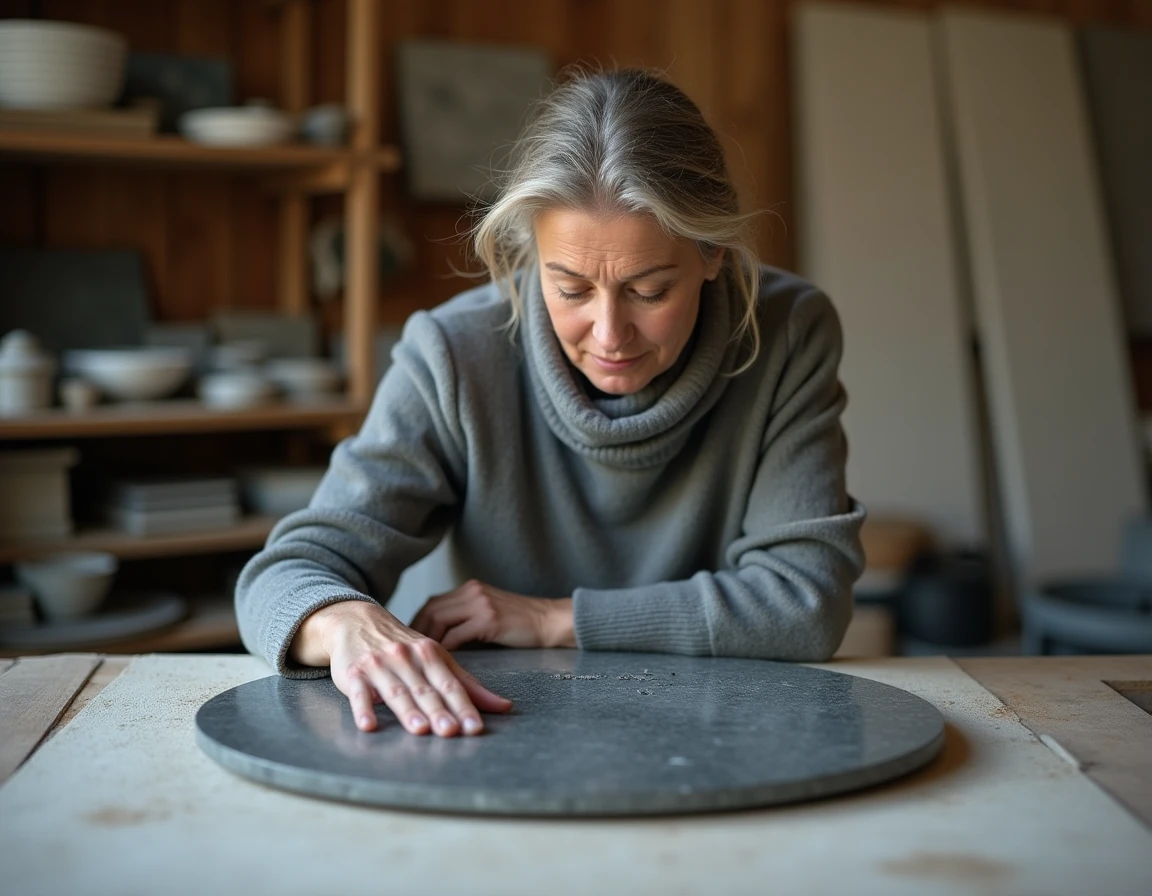
Granite remains the most durable material for an outdoor gravestone. Its density makes it resistant to frost, acid rain, and UV rays. Engraving on granite ages slowly, ensuring readability for several decades.
Plexiglass allows for color prints and photos, but its UV resistance is significantly lower. Under direct sunlight, colors fade after a few years. For a plaque placed in a covered columbarium, plexiglass may be suitable. Outdoors, it’s a risky bet.
Artisans now offer plaques made of wood or slate, laser-engraved with high precision. These alternative materials provide a warmer, more organic look. Slate ages well outdoors, while wood requires regular treatment to withstand moisture. Some creators also work with epoxy resin, incorporating dried flowers or personal symbols for truly unique pieces.
Have you noticed that some plaques combine two materials, for example, a granite base with a ceramic medallion? This approach allows you to benefit from the strength of granite and the delicacy of a ceramic portrait, a combination that standard catalogs rarely offer. As detailed on the Klottra website, the goal is to create an object that resembles the deceased person, not a generic product.
Laser engraving and customization: how far can we go
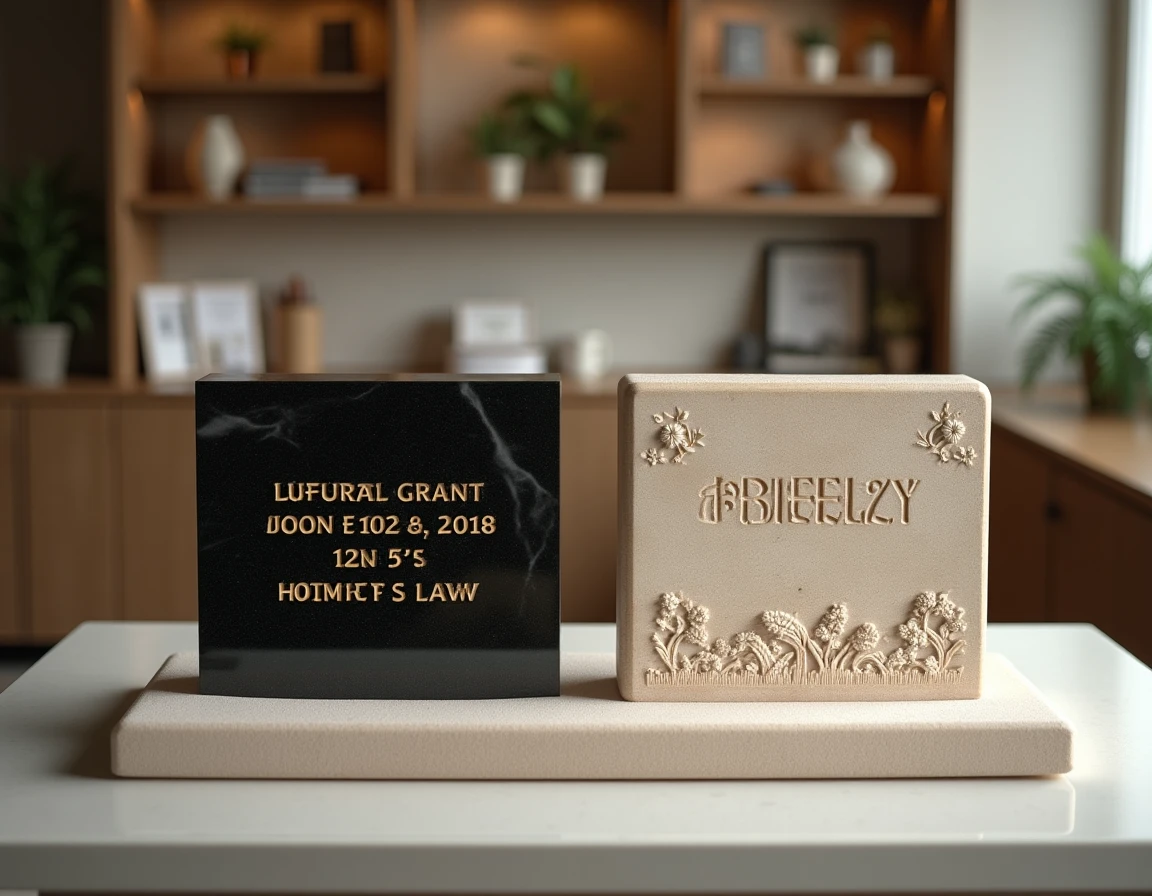
Laser engraving has transformed the possibilities for customizing memorial plaques. Where traditional mechanical engraving was limited to letters and a few simple patterns, the laser allows for the integration of portraits, landscapes, and detailed graphic compositions.
Specifically, a laser-engraved portrait on black granite reproduces the shades of gray from a photograph. The result is finer than a photo printed on plexiglass, and it does not fade over time.
Why does this choice of technique matter so much? Because the quality of the engraving determines whether the plaque will still be readable and moving in ten or twenty years. A shallow mechanical engraving on a soft material fades. A laser engraving on granite or slate retains its sharpness.
Texts and typography
The text remains the central element of a personalized memorial plaque. Beyond the name, dates, and a classic phrase, laser engraving allows for longer texts: an excerpt from a poem, a phrase the deceased often repeated, a few lines that summarize a life.
Here are some guidelines for choosing the text:
- A serif font reads better from a distance on granite, especially in small sizes. Handwritten fonts, more intimate, work well in large sizes for a first name or a short phrase.
- The length of the text depends on the available surface. On a standard-sized plaque, three to four lines are sufficient for a message that is easy to read. Beyond that, the font size decreases and reading becomes difficult from a distance.
- Avoid overly familiar quotes that lose their impact due to their banality. A personal memory, even simply expressed, resonates more than a proverb read a thousand times.
Shape and dimensions of a gravestone: adapting the tribute to the location
The shape of the plaque is not just a decorative detail. It must correspond to the type of burial site and the cemetery’s constraints.
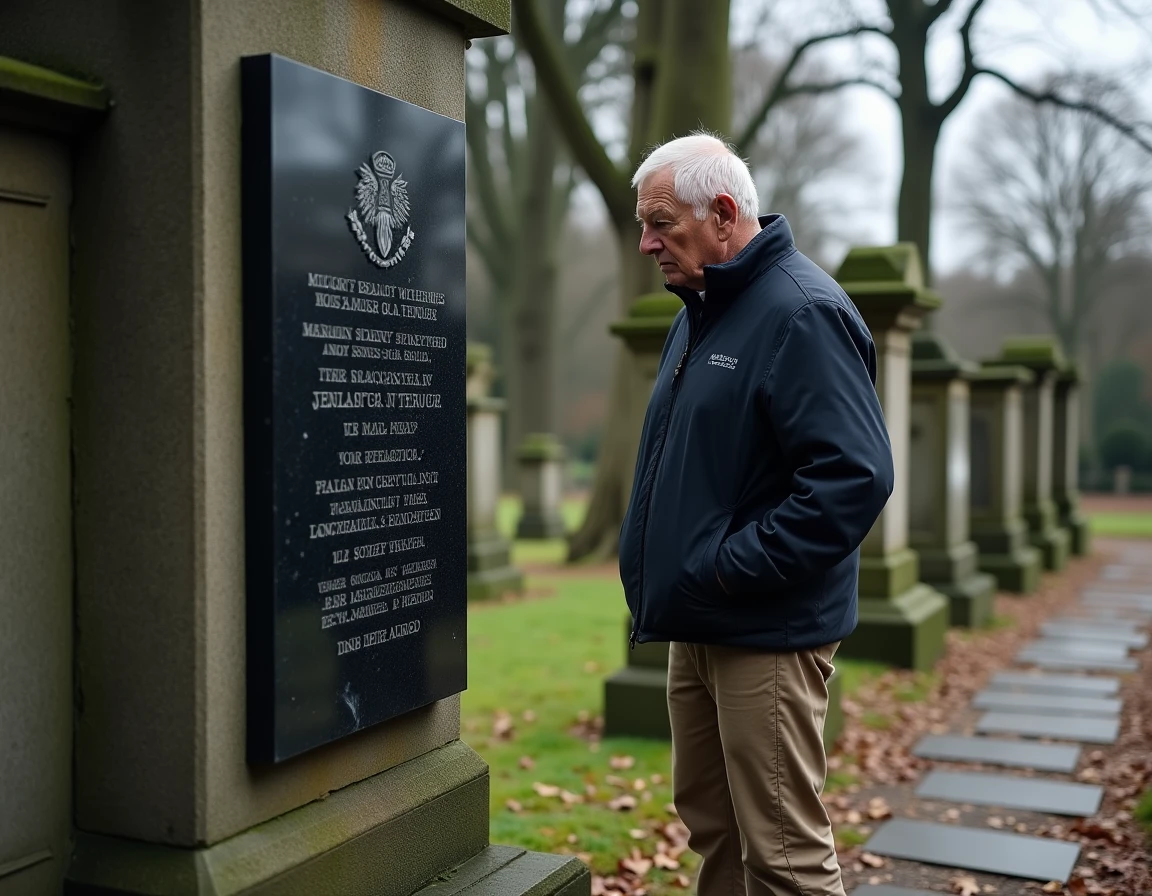
Each cemetery may impose rules regarding the dimensions and type of plaque allowed. Some prohibit plaques placed directly on the ground, while others limit the height of elements on the gravestone. Checking the cemetery regulations before ordering avoids an unpleasant surprise on the day of installation.
The most common shapes are rectangle and heart. The rectangle offers the largest surface for customization. The heart is suitable for a sentimental tribute but reduces the available space for text.
Less conventional shapes exist: open book, tree, animal silhouette. These options work when they reflect a trait of the deceased’s personality. A mountain enthusiast honored with a plaque shaped like a peak, a sea lover with a plaque evoking a wave, these choices tell something concrete.
Practical criteria to check before ordering
- Measure the available space on the grave or columbarium, including existing elements (vases, other plaques).
- Check the fixing method: some plaques are placed with an easel, others are fixed directly to the stone. The fixing method affects stability against wind and vibrations.
- Request a digital visual before approval. Most artisans and specialized sites offer a mock-up showing the final result with the chosen text, photo, and design.
- Anticipate maintenance: a material that requires little care (granite, slate) simplifies life for relatives who will visit regularly.
Artisan memorial plaques: when custom-made makes a difference
Catalog plaques cover most needs, but some situations call for a unique piece. An artisan can work from a drawing of the deceased, a symbolic object, or a specific color palette.
Epoxy resin, for example, allows for enclosing dried flowers from the deceased’s garden or a small personal object within the material. The result is a plaque that looks like no other, crafted like a commemorative work of art.
This type of creation requires a longer timeframe than a standard online order. Allowing several weeks between design and delivery helps avoid a hasty decision driven by emotion.
A successful personalized memorial plaque is one that, years after installation, continues to remind visitors who that person was. The material endures, the text remains clear, the shape tells a story. It is this coherence between the support and the memory that transforms a funerary object into a true tribute.