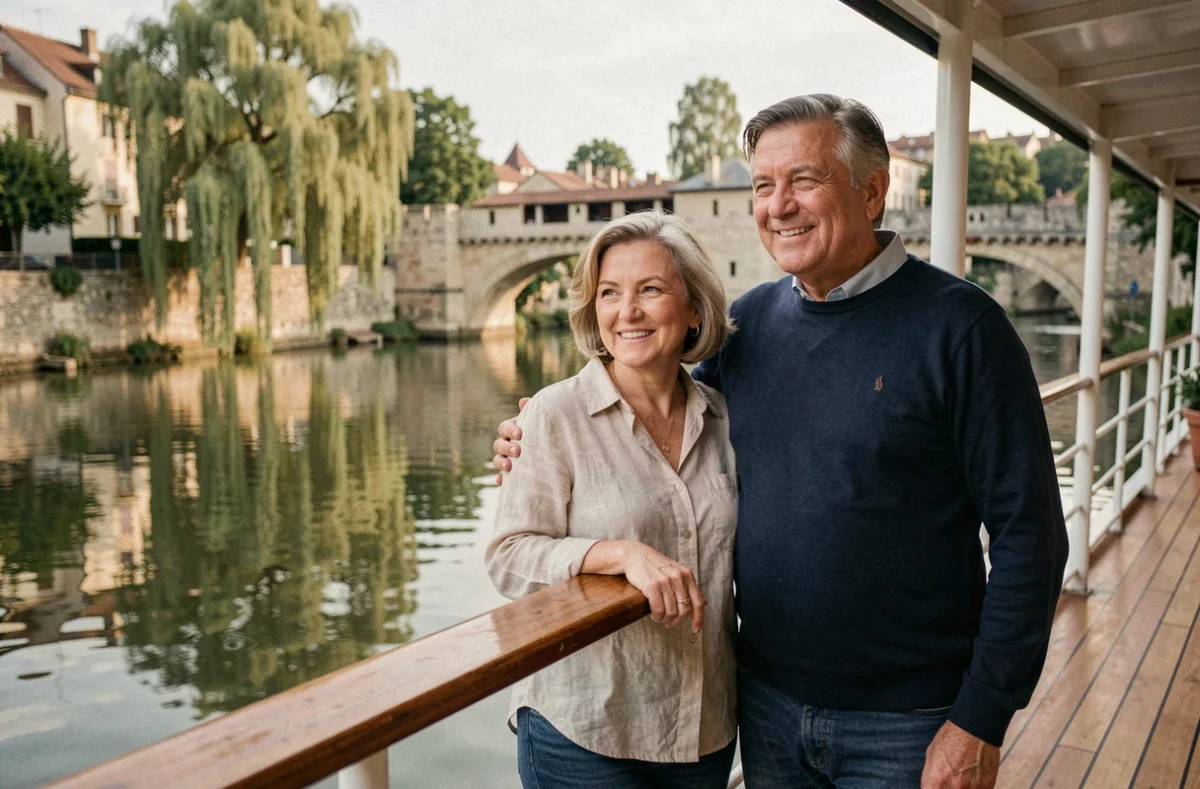
Comparing a river cruise to an ocean cruise often comes down to contrasting two philosophies of travel. The differences lie in the size of the ships, the pace of navigation, exposure to weather conditions, and the types of destinations accessible. The river cruise, a growing segment of cruise tourism in France, stands out with measurable parameters that deserve to be compared.
River cruise and ocean cruise: comparative table of key parameters
Before detailing each criterion, a summary table allows for a visualization of the structural differences between these two cruise formats.
| Criterion | River Cruise | Ocean Cruise |
|---|---|---|
| Maximum capacity | 200 passengers maximum | Several thousand passengers |
| Swells and seasickness | No swells, navigation on calm water | Variable depending on weather and area |
| Docking | In the heart of cities and villages | Maritime ports, often on the outskirts |
| Frequency of stops | Almost daily | Spaced out (days of sailing at sea) |
| Required license (rental) | No license required for certain boats | Not applicable (passenger boarding) |
| Hydrological risk | Low water or floods possible | Oceanic conditions (storms) |
This table highlights a often underestimated point: the river cruise is not a smaller version of the ocean cruise. It relies on a different logistical model, where proximity to stops and the smaller size of the boat shape the entire onboard experience.
To better understand the dynamics of this sector, the news from La Petite Pierre provides additional insights into how cruise tourism operates in France.
Water levels on the Rhine and Danube: an underestimated operational risk
Dependence on hydrological conditions is the most specific constraint of river cruises. On the Rhine and Danube, episodes of low water lead to ship changes or bus transfers. Operators may reorganize itineraries, replace a navigable segment with a road trip, or change the order of stops.
Floods pose a symmetrical problem. When the air draft under the bridges becomes insufficient, navigation is interrupted. Cruise companies indicate that they continuously monitor conditions, but the decision to adapt sometimes occurs at very short notice.
Concrete impact on the itinerary
A passenger booking a cruise on the Rhine between Strasbourg and Amsterdam may find themselves with a modified route of several hundred kilometers. This risk has no direct equivalent in ocean cruising, where weather conditions affect comfort but rarely the fundamental course of the journey.
- Low water: grouping of lock passages, reduction of available mooring, land transfers between two navigable sections
- Floods: temporary interruption of navigation, modification of planned stops, waiting upstream of a bridge
- Prolonged drought (notably on the Canal du Midi): restriction on the number of boats allowed simultaneously, extended travel times
On the Canal du Midi, drought can reduce available mooring to the point of requiring the grouping of lock passages. The environmental constraint is not limited to the boat’s emissions: it directly affects the navigability of waterways.
Seine and French canals: river destinations transforming the market
France holds a significant share of the European river cruise market, with itineraries on the Seine, Saône, Rhône, and a dense network of canals. Paris plays a particular role in this dynamic.
Small private boats on the Seine
In Île-de-France, boats accommodating 2 to 12 passengers diversify the market beyond classic cruises. This offering targets private groups and personalized experiences, a segment that large river vessels do not cover. Haropa Port has planned new stops suitable for these small units.
The reclamation of approximately 7 km of Parisian quays for pedestrians and soft mobility has enhanced the tourist appeal of the Seine. This transformation of the banks, documented by Paris-Île-de-France Capitale Économique, goes beyond just event effects: it integrates the river into the daily urban experience.
Saône and Rhône: the north-south axis
The Saône-Rhône axis connects Burgundy to Provence, passing through cities like Lyon and Avignon. Cruises on this corridor combine wine heritage and regional gastronomy, two elements that are difficult to replicate on a maritime itinerary.
However, companies operating on this axis face the same hydrological constraints as their Rhine counterparts. The levels of the Rhône vary according to the melting of alpine snow and Cevennes episodes, which imposes permanent operational flexibility.
Off-season river cruising: data explaining the trend
River tourism is no longer limited to the summer period. Autumn offers landscapes transformed by seasonal colors and temperatures still compatible with navigation. Destinations like the Canal du Midi or Burgundy gain attractiveness when summer attendance decreases.
- Generally lower rates than in high season for the same itineraries
- Less crowded stops, easier access to the heritage sites of the cities traversed
- Navigational conditions often favorable in September and October on French canals
The off-season segment represents a growth lever for companies, which adjust their schedules accordingly. The seasonality of river tourism is gradually aligning with that of land tourism, with an operating window that expands year by year.
The river cruise market in France is evolving under the combined effects of urban transformation of the banks, the rise of small private units, and an expanding seasonality. The hydrological variable remains the least controllable factor and probably the most determining for the reliability of the experience offered to passengers.